Thinking about installing an EV charger? Here’s what you need to know…
We’re pleased to share that Solitaire’s NAPIT membership now includes EV charger installations for both your home and business premises. It means we can help more customers enjoy the convenience of charging where they live or work.
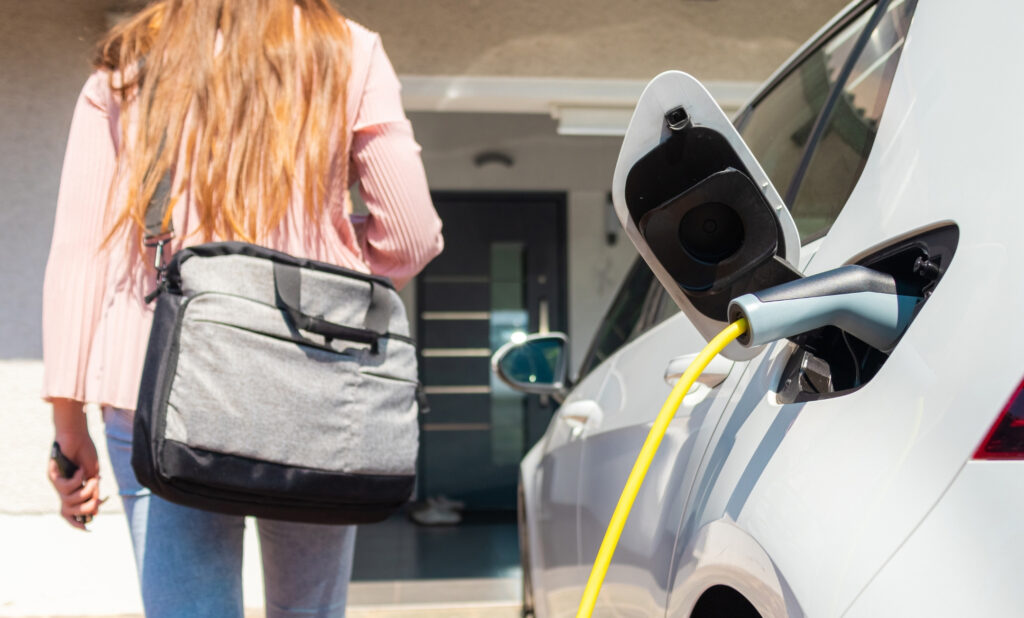
There’s something rather appealing about coming home, plugging in your car and knowing it will be ready to go the next morning. No extra stop on the way to work to get petrol, no waiting around at a charging station.
Whether you already drive an electric vehicle or just exploring the possibility we’re sure you have a few questions. Which charger do you need? How far can you travel on a charge? And what should you look for in an installer?
Here’s our friendly team advice.
Are more people charging at home?
Yes – home charging is already part of everyday life for hundreds of thousands of drivers. In March 2025, the government reported more than 680,000 domestic charge points in England alone.
And the number of electric cars continues to grow. In the first nine months of 2026, 454,947 new battery electric cars were registered in the UK – up around 30 per cent on the same period the year before, according to the Society of Motor Manufacturers and Traders. That’s just over one in four new car registrations.
What difference does a home charger make?
For many people, the biggest benefit is obviously convenience.
It can help with costs too. Charging at home is generally cheaper than using public chargers. With a suitable electricity tariff and compatible smart charger, you can arrange for charging to take place during cheaper periods. How much you save will depend on your tariff, your car and how much driving you do.
A dedicated charger also gives you equipment designed specifically for the job, with an electrical circuit and safety protection suited to EV charging.
How far can an electric care travel on one charge?
It’s one of the first questions people ask, and the answer naturally depends on the car! As a general guide, the Energy Saving Trust gives a typical range of around 220 miles on a full charge for a fully electric car. Some models will travel further, while smaller or older EVs may cover fewer miles.
The distance you actually get will also depend on the weather, your speed, the route, use of heating or air conditioning and the condition of the battery.
Just as an illustration, if your car delivers 200 miles of usable range and you drive 30 miles a day, that represents roughly six days of driving, with some charge left over.
How do you choose the right charger?
A charger rated at around 7kW is a common choice for homes with a suitable single-phase electricity supply. But the best option depends on your property and your vehicle: a more powerful charger won’t automatically charge your car faster if the car or electricity supply cannot support it.
There are a few everyday details to think about as well. Where do you normally park? Will the cable reach comfortably? Would you prefer a cable that stays attached to the charger? And how easy are the controls to use?
If you think you might have two electric cars in a few years, or you’re planning other electrical upgrades, it’s helpful to mention that early. A little thought now can make future changes easier. The Solitaire experts can help deliver the best solution for your lifestyle.
Why does your choice of installer matter?
An EV charger will draw electricity for long periods, so the installation needs to be properly assessed. Before fitting anything, your installer should check the property’s supply, existing electrical equipment and safety arrangements, alongside the other appliances and systems using electricity.
This is where choosing a contractor registered for EV charging work matters. NAPIT members are assessed against relevant standards, regularly checked for ongoing competence and required to hold valid insurance. Appropriate registration also allows eligible work to be self-certified under Building Regulations.
We’re pleased that Solitaire’s NAPIT membership now includes EV charging installations.
A good installation should leave you with more than a charger on the wall. It should include proper inspection and testing, the relevant certificates and a clear explanation of how everything works. Your installer should also check whether approval or notification is needed from the local electricity network operator.
If you’re looking into a grant, there’s one extra point to bear in mind: NAPIT registration and OZEV authorisation for grant-funded work are separate. Always check the current scheme requirements before you commit.
Will you need planning permission?
The good news is that planning rules in England were relaxed in May 2025, making more EV charger installations possible without a planning application.
There are still situations that need a closer look, including listed buildings, properties with restrictions on permitted development rights and installations affecting a public pavement. If you rent your home or own a leasehold property, you will, of course, need permission from your landlord or freeholder.
Coudl your workplace benefit too?
If staff are arriving in electric cars, or you’re considering electric vehicles for the business, workplace charging is worth a conversation with us.
Also thinking about a heat pump?
It’s useful to look at these plans together. An EV charger and heat pump all affect how your property uses or generates electricity.
You don’t need to install everything at once. But letting your installer know what you’re considering gives them a fuller picture and helps you plan sensibly for the years ahead.